Circulatory Systems Notes
Cambridge IGCSE Biology: Revision notes
Key facts
- The circulatory system is blood vessels, a heart (pump) and valves, giving one-way flow.
- Single circulation (fish): blood passes through the heart once per circuit: heart, gills, body, heart.
- Double circulation (mammals): blood passes through the heart twice, through the pulmonary and systemic circuits.
- Double circulation keeps blood pressure high and oxygenated and deoxygenated blood separate.
- Valves stop backflow; arteries have none because their pressure is high.
Pump, vessels and valves
Blood vessels, a pump and valves work together to keep blood flowing one way.
The circulatory system is a closed network of blood vessels, with the heart as a muscular pump and valves as one-way gates. The pressure gradient made by the heart keeps blood flowing forward.
One-way flow keeps transport of oxygen, nutrients and waste efficient and ensures every cell gets blood at the right pressure.
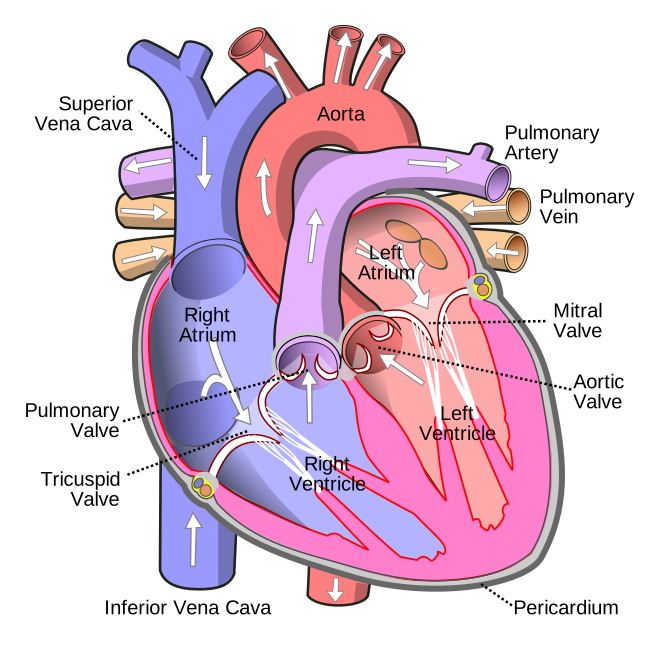
- Vesselscarry the blood
- Heartpumps it
- Valveskeep it one-way
What is the job of valves in the circulatory system?
Single circulation
In fish, blood passes through the heart once per circuit, going to the gills before the body.
Single circulation is found in fish. The heart pumps blood to the gills for gas exchange, and it then flows on to the body tissues and back to the heart. Blood loses pressure after the gills, so it moves slowly through the body.
This suits fish, which are generally less active and have lower metabolic demands than mammals.
- 1
Heart
blood leaves via the ventricle
- 2
Gills
gas exchange occurs
- 3
Body tissues
oxygenated blood flows directly to them
- 4
Heart
deoxygenated blood returns via the atrium
Then back to step 1
In a fish, which comes first after the heart?
Double circulation
In mammals, blood passes through the heart twice per circuit: once to the lungs and once to the body.
Double circulation is found in mammals.
- Pulmonary circulation: the right side pumps deoxygenated blood to the lungs; oxygenated blood returns to the left side.
- Systemic circulation: the left side pumps oxygenated blood to the body; deoxygenated blood returns to the right side.
A septum keeps the two sides apart.
- 1
Right side of heart
pumps deoxygenated blood
- 2
Lungs
gas exchange
- 3
Left side of heart
receives oxygenated blood and pumps it out
- 4
Body tissues
oxygen delivered
Then back to step 1
Pulmonary
- Heart to lungs only
- Leaves heart deoxygenated
- Lower pressure
Systemic
- Heart to all body tissues
- Leaves heart oxygenated
- Higher pressure
How many times does blood pass through a mammal heart in one complete circuit?
Why double circulation
The left ventricle re-pressurises blood after the lungs, so fully oxygenated blood reaches active tissues quickly.
Blood returning from the lungs has lost pressure. The left ventricle pumps it out again at high pressure, so oxygen is delivered faster and more forcefully.
The septum keeps oxygenated and deoxygenated blood apart, and each side can be regulated independently. This supports the high metabolic rate and activity of mammals.
- 1
Right side of the heart
pumps blood to the lungs
- 2
Lungs
blood picks up oxygen, and its pressure drops
- 3
Left side of the heart
pumps the blood again at higher pressure
- 4
Body
oxygenated blood reaches active tissues quickly
Then back to step 1
| Single (fish) | Double (mammal) | |
|---|---|---|
| Blood pressure to body | Lower; drops through the gills | Higher; re-pressurised after the lungs |
| Oxygen delivery | Slower delivery | Faster delivery |
| Metabolic support | Lower metabolic rate | Supports high activity |
Single (fish)
- Blood pressure to body:
- Lower; drops through the gills
- Oxygen delivery:
- Slower delivery
- Metabolic support:
- Lower metabolic rate
Double (mammal)
- Blood pressure to body:
- Higher; re-pressurised after the lungs
- Oxygen delivery:
- Faster delivery
- Metabolic support:
- Supports high activity
Why does double circulation allow higher pressure to the body?
Valves
Valves close when blood tries to flow backwards, so blood moves in one direction only.
Valves lie between the chambers of the heart and between the heart and the arteries. Veins also have valves, especially in the limbs; the squeezing of skeletal muscles pushes blood through them. Arteries have no valves because their high pressure keeps blood moving forward. Backflow is stopped by the flaps closing.
- 1
Forward flow
blood pressure pushes the flaps open
- 2
Attempted backflow
blood pushes the flaps shut
- 3
Result
blood moves in one direction only
Why are valves not needed in arteries?
Try an exam question
Explain why mammals have a double circulatory system but fish have a single circulatory system.
[4 marks]
- [1]In double circulation blood passes through the heart twice per circuit.
- [1]Blood returns to the heart after the lungs and is pumped again at high pressure.
- [1]This delivers oxygenated blood to the tissues faster, supporting the high metabolic rate of active mammals.
- [1]Fish are less active with lower metabolic demands, so the lower pressure of single circulation is sufficient.
That's the notes covered.
Carry on to the next subtopic.