Photosynthesis Notes
Edexcel GCSE Biology: Revision notes
Key facts
- Producers (plants and algae) turn light energy into chemical energy in glucose.
- , and it is endothermic.
- The limiting factor is whichever of temperature, light intensity or is scarcest.
- Greenhouses optimise all the factors together.
- Light intensity is proportional to .
- Carbon dioxide + waterglucose + oxygen
The photosynthesis reaction
Producers use light absorbed by chlorophyll to turn carbon dioxide and water into glucose and oxygen.
Plants and algae are the main producers. They convert light energy into chemical energy in glucose, forming the base of biomass in ecosystems. Photosynthesis is endothermic, using light absorbed by chlorophyll.
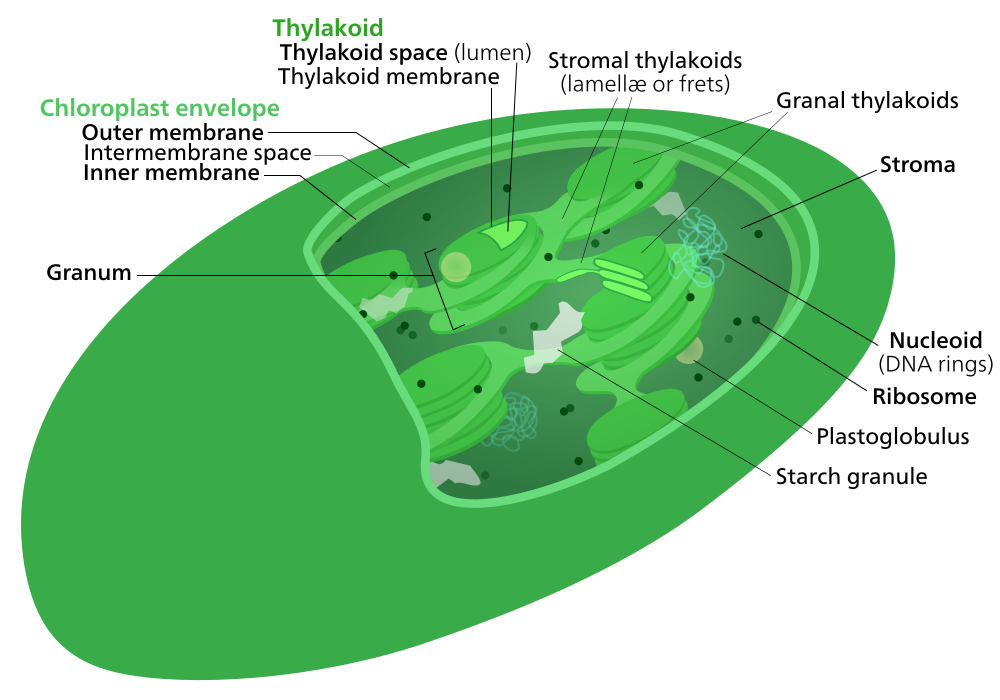
What absorbs the light energy in photosynthesis?
Limiting factors
The factor in shortest supply limits the rate, and growers optimise all of them together.
Three factors affect the rate: temperature, light intensity and concentration. The rate plateaus once another factor becomes the limiting factor. High temperature denatures enzymes. Improving one factor alone is wasted once another limits, so greenhouses control temperature, light and together.
- Rate of photosynthesislimited by the scarcest factor
Temperature
- High values denature enzymes
Light intensity
- Rate rises with intensity
concentration
- Rate rises with concentration
A greenhouse grower adds more light but the rate stops rising. Why?
Core practical: light intensity
Count oxygen bubbles from pondweed at different lamp distances, controlling temperature and .
Keep temperature and constant. A gas syringe measures the volume of gas more precisely than counting bubbles.
- 1
Set up
place pondweed a set distance from a lamp
- 2
Control
keep temperature and constant
- 3
Measure
count oxygen bubbles (or use a gas syringe)
- 4
Repeat
change the lamp distance and measure again
Why use a gas syringe instead of counting bubbles?
Inverse square law
Light intensity is proportional to 1 over distance squared, so doubling the distance gives a quarter.
At low levels, rate is proportional to light intensity. Light intensity follows the inverse square law: it is proportional to .
Worked example
The lamp moves from 20 cm to 40 cm. What happens to the light intensity?
- 1
Intensity at 20 cm is proportional to .
- 2
Intensity at 40 cm is proportional to .
- 3
Ratio: .
What happens to light intensity when the distance doubles?
Try an exam question
A student investigates how light intensity affects the rate of photosynthesis in pondweed. Describe the method and name two variables to control.
[4 marks]
- [1]Place pondweed a set distance from a lamp.
- [1]Count the oxygen bubbles released in a set time (or measure gas volume with a gas syringe).
- [1]Repeat at different lamp distances.
- [1]Control temperature and carbon dioxide concentration.
That's the notes covered.
Carry on to the next subtopic.